
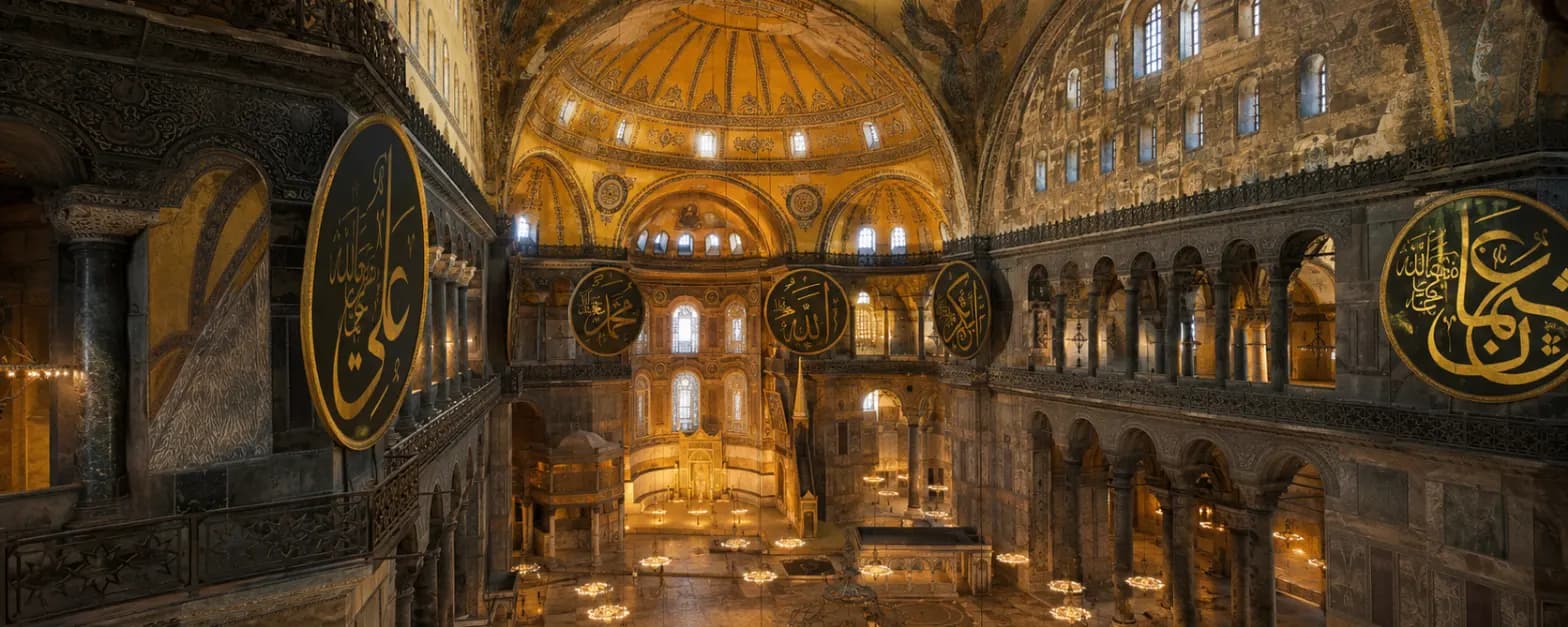
The interior of Hagia Sophia in Istanbul, Turkey brings together more than 1,400 years of architecture, religious history and artistic change. Inside, visitors can see the enormous central dome, Byzantine mosaics, marble-covered walls, Islamic calligraphy and important Ottoman additions. The building is especially remarkable because elements from its Byzantine church period and Ottoman mosque period can still be seen within the same monumental interior.
What Can You See Inside Hagia Sophia?
Inside Hagia Sophia, visitors can see architectural and decorative elements from both the Byzantine and Ottoman periods. The vast central dome immediately dominates the space, while smaller details throughout the building reveal how Hagia Sophia changed over more than a thousand years. Some of the most important features inside Hagia Sophia include:
- The Grand Dome: The enormous central dome dominates the interior and is one of Hagia Sophia's most important architectural features.
- The Emperor's Door: Also known as the Imperial Door, this monumental entrance was traditionally associated with the Byzantine emperor.
- The Imperial Lodge: An elevated Ottoman-era lodge used by the sultan during worship.
- The Deesis Mosaic: One of Hagia Sophia's best-known Byzantine mosaics, showing Christ with the Virgin Mary and John the Baptist.
- The Wishing Column: Also known as the Weeping or Sweating Column, it is one of the building's best-known visitor traditions.
- The Mihrab: The prayer niche indicating the direction of Mecca.
- The Minbar: The raised pulpit beside the mihrab used for sermons.
Together, these features make the interior of Hagia Sophia especially distinctive. Visitors can see Byzantine Christian art, monumental architecture and Ottoman Islamic additions within the same space, helping explain the different periods of the building's long history.
The Grand Dome of Hagia Sophia
The Grand Dome is the defining feature of the interior of Hagia Sophia. Windows around its base allow natural light to enter, creating the impression that the dome is floating above the central space. Its system of arches, pendentives and semi-domes was an extraordinary engineering achievement for the sixth century and later influenced both Byzantine churches and Ottoman mosques.
Interior of the Church of Hagia Sophia
During the Byzantine period, Hagia Sophia served as the main cathedral of Constantinople. The interior of the church of Hagia Sophia was designed for imperial ceremonies and Christian worship. Marble decoration, monumental columns and religious mosaics filled the interior. Images of Christ, the Virgin Mary, Byzantine emperors and empresses were added during different periods. Several of these works survive today. Read more about the Hagia Sophia mosaics.
The Emperor's Door and Imperial Areas
The Emperor's Door was one of the most important entrances in Byzantine Hagia Sophia and was traditionally reserved for the emperor and his entourage. Another important feature is the Imperial Lodge, an elevated Ottoman addition that allowed the sultan to attend prayers from a protected area with a commanding view of the interior.
The Deesis Mosaic
The Deesis Mosaic is one of the most famous artworks inside Hagia Sophia. It depicts Christ in the centre, with the Virgin Mary and John the Baptist on either side. Its surviving details show the sophistication of late Byzantine mosaic art and make it one of the highlights associated with the upper gallery.
The Mihrab and Minbar
The mihrab and minbar reflect Hagia Sophia's transformation into a mosque after 1453. The mihrab marks the direction of Mecca, while the minbar is the raised pulpit used for sermons. Both stand alongside much older Byzantine architectural elements, showing how the interior changed across different periods.
The Wishing Column
The Wishing Column is also commonly called the Weeping or Sweating Column. A long-standing tradition involves placing a finger into a small opening in the column and making a wish. Beyond the legend, the column has become one of the most recognisable details associated with a visit to Hagia Sophia.
Islamic Calligraphy and Ottoman Additions
Large circular calligraphy panels are among the most noticeable Ottoman features inside Hagia Sophia. Visitors can also see the mihrab, minbar and other additions connected to its centuries of use as a mosque. Together with the Byzantine dome and mosaics, these elements create the layered appearance that makes Hagia Sophia's interior unique.
What Can You See from the Upper Gallery?
The upper gallery gives visitors a wider view across the central interior, chandeliers and dome. It is also closely associated with important Byzantine mosaics, including the Deesis Mosaic, and allows visitors to appreciate architectural details that are difficult to see from ground level.
Is the Interior of Hagia Sophia Worth Seeing?
Yes. The interior is one of the main reasons to visit Hagia Sophia. The Grand Dome, Byzantine mosaics, Emperor's Door, Imperial Lodge, mihrab, minbar, calligraphy panels and historic columns reveal different stages of the building's long history.